Personal Review
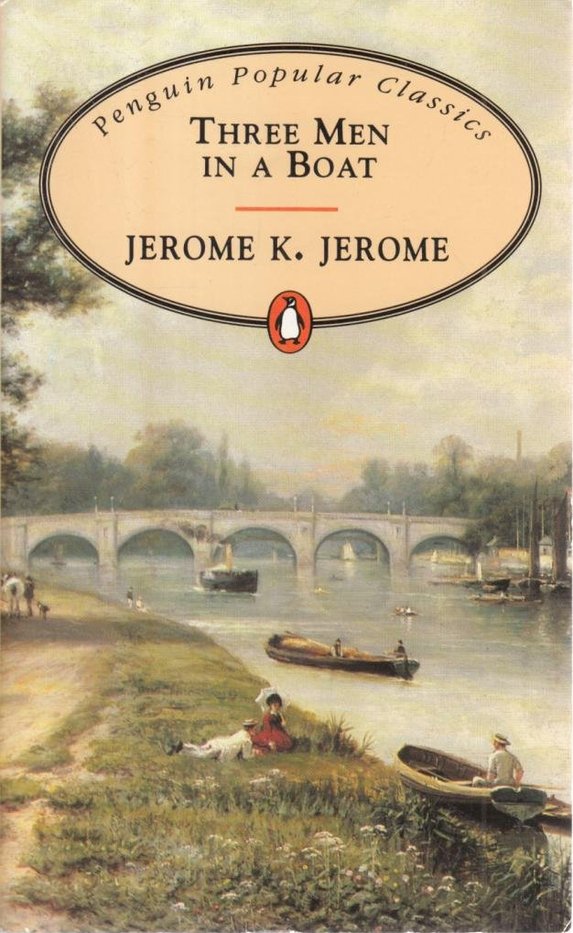
The central idea of three men in a boat is that the mind prefers the drama of preparation to the quieter labour of simply enduring reality. Once this preference is recognised, the river journey becomes a sustained demonstration of ordinary self-deception. Every over-packed hamper, every invented illness and sudden philosophical digression is evidence of this subtle, unavoidable fact. Jerome does not lecture us. He simply allows the pattern to repeat until the reader begins to recognise the same small internal negotiations in himself.
Favourite quotation
“I like work; it fascinates me. I can sit and look at it for hours.”
Jerome K. Jerome, Three Men in a Boat
This has a practical implications for anyone who usually prefers nonfiction. Most of us do not require a tragic downfall to learn something useful about our own habits. We only need enough accumulated absurdity to notice the patterns we keep rehearsing. The three men diagnose themselves with every possible disease before they have even left London, pack as though preparing for polar exploration, and then spend the actual journey discovering that the chief obstacles are damp clothes, a badly cooked stew, and their own reluctance to admit that the whole enterprise was slightly ridiculous from the start. The comedy works because the reasoning never feels alien to our own minds. You watch them decide that the only proper response to a wet tent is to philosophise about the nature of suffering, and you remember feeling the same impulse somewhere in your own recent behaviour.
The book also doesn’t seek to reform the characters so much as exhaust their pretensions. Improvement, if it occurs at all, comes with sudden insight just as much as it does with a gradual collapse of carefully constructed plans under the inexorable weight of reality. By the final stretch of the Thames the men are slightly less convinced of their own fragility and slightly more willing to laugh at it. That is not a grand moral transformation, yet it is a usable one. The river simply makes the maintenance of their preferred self-image too tiring to continue.
Even the digressions serve the same purpose. When Jerome abandons the boat for several pages to discuss historic Thames-side inns or the proper way to hang a picture, he is illustrating how the unsupervised mind seizes any opportunity to wander away from the present difficulty. The characters would rather discuss abstract principles than deal with the wet socks currently in front of them. This, too, is uncomfortably familiar (atleast to me). Most people who claim to prefer self help over fiction will recognise the same tendency in themselves, the disposition to theorise and optimize at length rather than attend to the small, unglamorous task that is ostensibly more effective.
I will admit that the digressions occasionally try the patience. There are moments when the modern reader wishes Jerome would simply return to the river. Yet even this irritation is useful. It demonstrates how the mind’s preference for the interesting over the necessary creates room for impatience.
The book is full of people who would rather manage an elaborate internal drama than accept that most of their difficulties are ordinary and temporary.
Three Men in a Boat is something milder and, in its way, more widely applicable to most readers. A prolonged demonstration of the ordinary mechanisms by which people turn small inconveniences into elaborate internal narratives, and of how those narratives usually dissolve once reality is allowed to intervene long enough. The laughter is the surface. Beneath it sits a repeated, gentle invitation to notice when you are doing the same thing yourself, and to stop before the packing list becomes longer than the journey.
★★★★★
Light, Enjoyable and Revealing