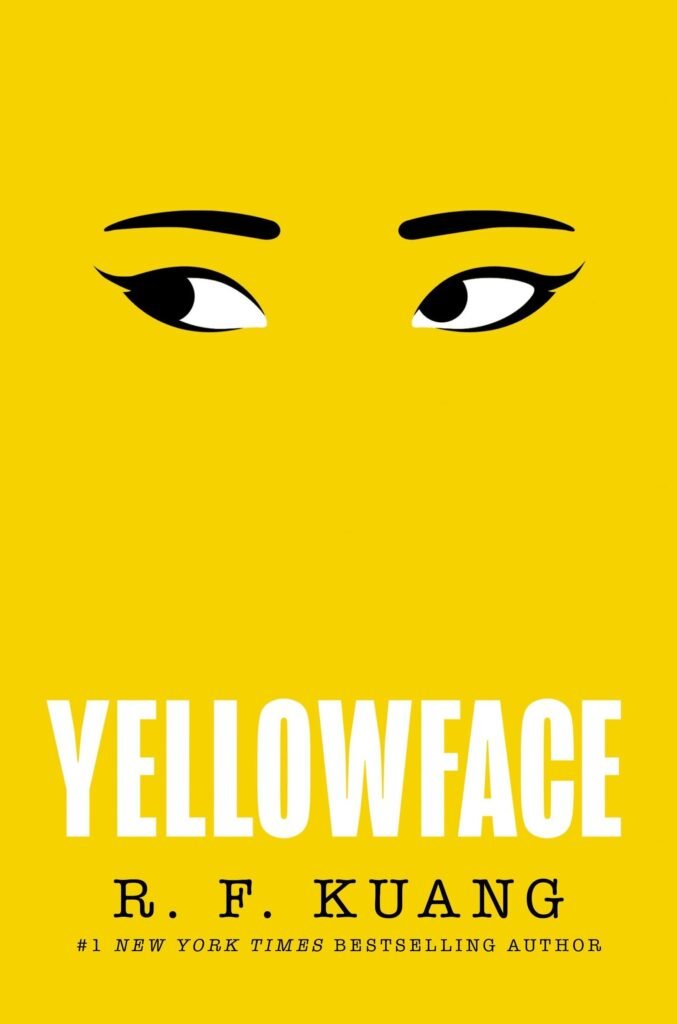
Personal Review
I do not have particularly much to say about this book that would not reveal its story. So, rather than attempting to analyse it in detail, I will simply communicate what I wish I had been told before I began it.
Kuang has, perhaps even unintentionally, structured a novel that gradually envelops the reader in the protagonist’s psychological state while simultaneously cultivating a particular hatred towards her. We do not merely observe June’s decline from a distance. Instead, we are made to inhabit the logic through which she interprets her own actions, resentments, and failures. The uncomfortable part is that, at times, her reasoning is understandable. Her frustration at being overlooked and her belief that recognition is not distributed purely according to merit are not entirely irrational. Yet the novel repeatedly shows how these grievances become something far more corrosive when they are used to explain away every failure and justify every action.
June would rather destroy herself than confront the possibility that she is simply unable to construct narratives engaging enough to command the recognition she believes she deserves. Kuang layers one narrative on top of another. There is June’s own, in which she is the talented but perpetually underrated writer, denied the success she deserves, while Athena is an overrated figure whose reputation has been inflated by qualities unrelated to literary ability. June convinces herself that the disparity between them is not fundamentally one of talent, but of circumstance, image, identity, and the arbitrary preferences of the literary world. And then there is the obvious success of the stolen manuscript. Its reception demonstrates that there is, indeed, a certain gulf in literary capacity between the two of them. And as the manuscript achieves precisely the recognition June has spent her career believing herself entitled to, and in doing so threatens the entire explanation she has constructed for her own lack of success. If Athena’s success were merely the product of external factors, then June’s possession of Athena’s work should not be quite so consequential. Its success becomes evidence of something June is psychologically incapable of admitting.
Of course, June admits parts of this reality, but only with contempt. Her arrogance is buried so deeply that, rather than forcing her to confront the truth, it seems to invert itself into a kind of neurotic obsession with Athena. Athena becomes impossible for her to escape. June begins to treat herself almost as an inheritor of her legacy, as though proximity to Athena’s work might allow her to inherit some part of the talent that produced it. The relationship becomes increasingly pathological. What begins as resentment slowly transforms into fixation, and her attempts to preserve her own identity become inseparable from her obsession with the woman whose identity she has attempted to appropriate.
“What more can we want as writers than such immortality?
June Hayward
Don’t ghosts just want to be remembered?”
This is where the novel becomes particularly effective, and particularly unpleasant. June is constantly constructing narratives, not only as a writer but as a means of preserving her understanding of herself. Every event must be arranged into a story in which she remains, if not entirely innocent, then at least fundamentally wronged. Every criticism becomes evidence of persecution, every obstacle becomes confirmation that the system is against her, and every success becomes proof that she deserved it all along.
As her true character becomes increasingly difficult to conceal, the reader is left with progressively less sympathy for her. Her mental deterioration is uncomfortable to observe, partly because it is not presented as the sudden collapse of an otherwise decent person. Rather, it is the gradual consequence of a refusal to accept responsibility. Each lie requires another lie to sustain it, and each attempt to protect her self-image demands a further distortion of reality.
I personally dislike spending hours of my time with a character who only grows worse and appears to learn almost nothing from the experience. This is not necessarily because I demand justice or even redemption. A protagonist does not need to be punished, forgiven, or transformed into a better person for a story to be meaningful. What I find more difficult to accept is an absence of development. There must, at least for me, be some sense that the character’s experience has produced understanding, even if that understanding arrives too late to save them.
June’s deterioration certainly has meaning, but it is a very particular kind of meaning. We watch a woman slowly lose herself in the increasingly exhausting task of maintaining a lie. The tragedy is not simply that she plagiarises, or that she is eventually forced to confront the consequences. It is that she seems almost incapable of extracting any wisdom from what happens to her. Even as reality repeatedly contradicts her preferred narrative, she finds another way to reinterpret it.
Kuang’s conclusion is sensible enough, but it also feels somewhat at odds with the pretensions June establishes at the beginning of the novel. June initially presents herself as someone deeply concerned with questions of literary merit, recognition, authenticity, and fairness. Those pretensions gradually collapse, but what replaces them is not necessarily greater insight. Instead, much of the novel becomes an exercise in watching her desperately preserve a lie that has long since consumed the person she believed herself to be.
Perhaps that is precisely the point, but it also limits my engagement with the book. Unlike Mike Ross in Suits, another character whose story centre’s around an enormous deception about his alma matter, June derives almost no lessons from the experience.
Although all this is evidence for the fact that Yellowface is an effective work, it also builds the case for those who may label it unsatisfying. Its greatest strength lies in how successfully Kuang traps the reader inside June’s increasingly distorted consciousness. We understand the mechanisms through which she justifies herself without being asked to forgive her.
There are many political dimensions of this work, and i chose to avoid them here to keep my own peace. But I am well aware how, as good reads user “s.penkevich [hiatus-will return-miss you all]” put it, “Yellowface sinks its teeth into the world of publishing and the discourses on authenticity through the eyes of June Hayward”.
By the end, the I was not left simply with contempt for June, but with the uncomfortable knowledge of the fact that the cause of her downfall was the human tendency to construct explanations that preserve our sense of ourselves.
★★★★☆
Debilitatingly addictive, mildly recommend.