Personal Review
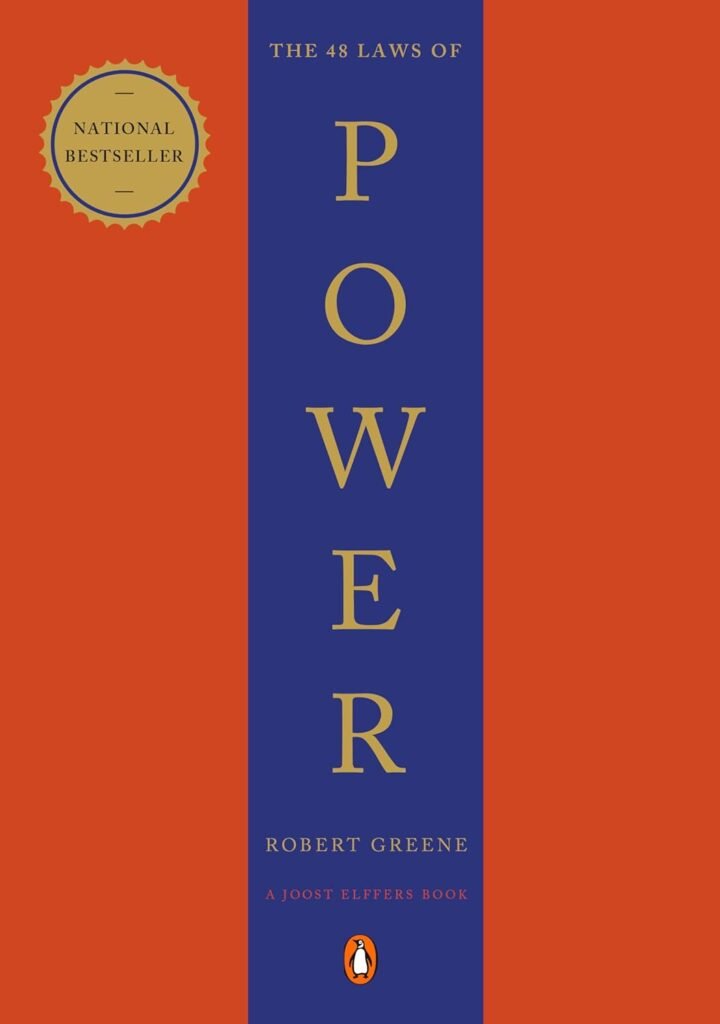
The 48 Laws of Power is, more or less, a modern field guide to navigating life according to the principles of Niccolò Machiavelli and his seminal work, Il Principe (The Prince). Machiavelli is often regarded as a forefather of practical political philosophy because he detached political analysis from questions of what one ought to do and instead moved toward a more brutal form of pragmatism.
Many people who have gained something from the book, myself included, would insist that everyone should read it at least once in their lives. Others, however, look upon the apparent amorality of its teachings with considerable disdain. They are disturbed by the fact that its laws do not always direct the reader toward evil, but neither do they reject it outright. Instead, morally questionable actions are sometimes treated like mud on the road. One should avoid stepping into it whenever possible, but when there is no other path, one may have to do so. Even then, the goal is to emerge with as little stain as possible. And if a great stain must be suffered, then one should ensure that the same path never has to be crossed again.
Such calculation cannot easily be judged in emotional terms because, by its very nature, it is unemotional. Yet emotion is an integral part of our humanity, and that is precisely why many conscientious readers may find the book disturbing. Its worldview asks us, at least temporarily, to suspend the instinctive moral judgments through which we ordinarily interpret human behaviour and instead view people as they may actually behave when ambition, fear, and self-interest are involved.
In order to extract its lessons as effectively as possible, Greene collates stories in which the characters are almost invariably overflowing with ulterior motives. The writing reflects an attitude of extreme cynicism in nearly every dimension of that word. If that attitude were a character, it would be the quintessential ruthless politician. Stalin’s political manoeuvring during his struggle with Zinoviev, Kamenev, and Trotsky can be read through many of the laws Greene describes. Ironically, the atmosphere of fear and suspicion that such tactics helped create may also have contributed to Stalin’s increasingly isolated and paranoid final years.
The book, however, is not exclusively concerned with dictators and political purges. Similar principles appear in business. The art dealer Joseph Duveen, for example, built immense influence through his ability to manipulate information, perceptions, and relationships, allowing him to establish an extraordinary degree of control within the art market. Greene’s central claim is that the mechanisms of power are not confined to politics. They emerge wherever human beings compete for influence, status, wealth, or recognition.
But should you read The 48 Laws of Power?
There is an undeniable usefulness in understanding how one’s enemies, rivals, or even friends may think when their interests conflict with one’s own. The book does not necessarily preach an openly offensive doctrine in which the reader is encouraged to manipulate everyone around them. Often, its advice is closer to that of an assassin who does not reveal his intentions before he is ready to act. In many situations, the better strategy is simply to remain cautious, discreet, and observant. Greene also repeatedly advises the reader to keep their hands clean whenever possible.
And, of course, there is little harm in understanding how to navigate life with greater tact. Law 1, for instance, “Never Outshine the Master,” is a useful example. To paraphrase Jesus Christ, lambs can attract attention and place targets on their own backs. The lesson is not necessarily that one should suppress one’s abilities or remain permanently subordinate. Rather, it is that displaying one’s superiority without considering the insecurities and interests of those around you can create unnecessary enemies. Sometimes, understanding power means recognising that being right, talented, or capable is not enough. One must also understand how other people will react to it.
“Behold, I am sending you out as sheep in the midst of wolves, so be wise as serpents and innocent as doves.”
Matthew 10:16 English Standard Version
The extent to which biblical moral principles are compatible with The 48 Laws of Power largely determines the degree to which I am willing to subscribe to its teachings. But even for those who are not Christian, a similar moral boundary can be found in Immanuel Kant’s Formula of Humanity, which holds that we should treat individuals as ends in themselves rather than merely as means to an end. This presents a fundamental conflict with the Machiavellian worldview. For a strict Machiavellian, the end may justify the means. If murder were believed to secure the future of the state in the long run, it could be considered permissible, even though murder itself is morally reprehensible.
Nevertheless, the book has the capacity to construct a lens through which an interesting dimension of history can be observed, one that revives some of the subject’s otherwise duller qualities. I have personally encountered many obscure yet useful tales and historical episodes through its pages, and I will likely keep it on my shelf as a point of reference whenever I am faced with a strategic decision.
For the morally conscientious reader, The 48 Laws of Power are perhaps better understood not as forty-eight laws to be followed unquestioningly, but as forty-eight principles of power that must be considered seriously. They reflect a reality often shrouded in cynicism, but one that nonetheless exists. If you choose to reject Greene’s advice, it may still be useful to understand it. Power does not disappear simply because we refuse to acknowledge its mechanisms, and understanding how people seek, acquire, and preserve it may be valuable even when we choose not to do the same.
★★★★★
Engrossing, but beware.