
The Crooked Timber of the Past
I have long lived under a mild but persistent social pressure to apologize for caring about history. The people I meet treat it as a slightly embarrassing specialty, the preserve of those who prefer footnotes to life. History, in this perspective, is an obscure niche occupied by the social oddities who fuss over minor details and wrap their findings in a prose so dense that the very idea of ever truly understanding an event or an era is placed beyond ordinary human reach. The past becomes a closed conversation among the initiated, interesting only to itself.
This picture is not entirely false. Historians can be pedantic. The literature is often forbidding. Yet the stereotype misses the real force of the subject. Many who remain attached to it are drawn by the sheer strangeness of earlier ways of living, or by the sharp contrast with the present, or by a simple wish to know how we arrived at the arrangements we now take for granted.
Although I defend the discipline against the shallowness of this caricature, it is not why it holds me. That is much better characterized to the grip of a Shakespearean tragedy.
In Romeo and Juliet the catastrophe hinges on a failure of communication. A surplus of presumption and a deficit of frankness produce deaths that need not have occurred. Clearer speech and less certainty might have altered the ending. And I keep finding the same structure when I read the historical record.
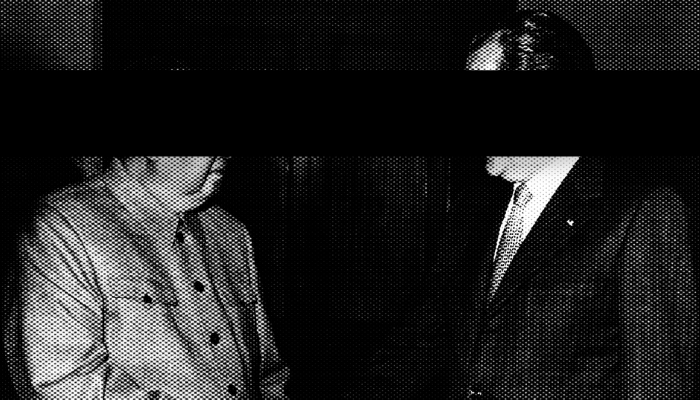
The conventional narratives we inherit are usually broad and confident. But under the pressure of deeper enquiry they fracture. The tragedy is not only a misinterpretation of what happened, but how little of the actual texture survives in the versions that circulate. Take the Cold War. The conventional account still presents it as a clean confrontation between two camps locked in permanent ideological enmity. The actual transcripts and memories of those involved awkwardly shrug in response. For example, At the height of the Cuban Missile Crisis both Kennedy and Khrushchev were hemmed in by their own hard-liners. Neither wanted the logic of the situation to run to its conclusion. The transcripts show men calculating domestic political costs while searching for exits that would not look like surrender. The public narrative of pure hostility obscures the mutual fear and the practical maneuvering that actually shaped decisions. The same pattern appears in the opening of China. The records of Nixon’s conversations with Mao and Zhou reveal a degree of strategic and even emotional alignment that the official rhetoric of the time could not admit. Both sides were operating inside tight constraints, recognizing interests that propaganda made it dangerous to acknowledge openly. Read Nixon and Mao: The Week That Changed the World and you too will marvel at the palpable capriciousness of all the involved parties. Kissinger’s Detente is not really taught as a time of Realpolitik but a period of toleration. But the actual discussions assert something short of a limited friendship.
These discoveries do not leave me with a comfortable relativism. Some facts remain stubborn. Some moral distinctions hold. But what dissolves is the tidy arc that makes the past feel safely distant and easily judged, because the closer one looks, the more the actors resemble people working under pressure, with incomplete information and conflicting incentives. When you recognize this the subject begins to feel more urgent than antiquarian. And no longer hides behind a mask of purported relevance.
Isaiah Berlin once quote Kant’s remark that out of the crooked timber of humanity no straight thing was ever made. The line is usually applied to politics and morals. It applies equally to our understanding of the past. We prefer straight narratives because they are easier to teach, easier to moralize, and easier to weaponize. The record, when examined with care, is rarely straight. It is full of hesitation, contingency, and motives that refuse to arrange themselves into a single explanatory scheme.
The cost of ignoring that crookedness extends to the, solutions that are designed for them. Decisions taken on the basis of simplified stories misclassify the original problem and then generate remedies that address a phantom. Likely creating a several other problems in the process. For example The Treaty of Versailles punished Germany as a solution to war, partly because in the minds of statesman, it had worked with France at Vienna. But it was not great men themselves, as the conditions that prosper them that the allies had to fear. It wasn’t another Bismarck, it was a resentful German people.
I know most people will never read the primary material. Textbooks, documentaries and public commentary must compress. But compression, by definition, erases the details. The friction, the internal contradictions and the moments of genuine uncertainty disappear. What remains is a set of moral cartoons. The past becomes a store of cautionary tales or of reassuring precedents, depending on the needs of the moment. In either case the living complexity is lost.
I do not believe that every historical episode dissolves into pure ambiguity. That would be another monism, only inverted. What I do believe is that the habit of reaching for the simplest available story is itself a political and moral force, and not a benign one. Because it is the same habit that produces the Shakespearean tragedy, the refusal to tolerate uncertainty long enough to speak more carefully or to assume less. History, read properly, is a continuous education in the refusal to simplify.
“no one remembers the former generations, and that those yet to come will not be remembered by those who follow them”
Ecclesiastes 1:11 NIV
Solomon’s observation is often taken as a lament about the futility of human effort. I now read it to you as a practical warning. Memory is short. The price of forgetting is paid by people who never chose the original mistakes. Recovering the texture of past decisions is one of the few ways we have of reducing that price. The work is slow, often unrewarding, and permanently incomplete. It is also the only method I know of keeping the past from hardening into a collection of convenient myths.
And this is why the subject continues to occupy me. It is not the romance of distant ages or the satisfaction of mastering obscure facts (although a bit of that is certainly present somewhere). It is the repeated encounter with the same human tendency. The preference for a clean frame over a difficult one. And every time the sources are opened, the pattern reappears. We must notice when its happening, to resist it where possible, and pass on whatever remains. The alternative is to keep rehearsing variations of the same tragedy, each time convincing ourselves that this particular misunderstanding is unique to the occasion.