
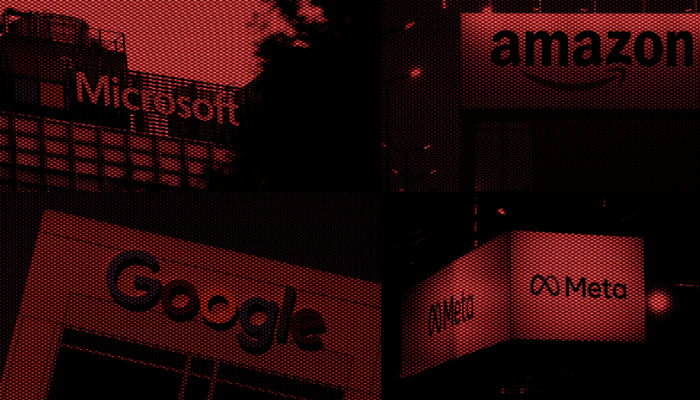
The most powerful technology companies in the world sell things that are nearly infinitely cheap to reproduce. A piece of software can be copied millions of times without requiring a new factory, a new shipment, or another unit of the original physical capital or labour inputs used in production. A search engine serves multiple users without constructing another search engine. An image editor can be downloaded onto another computer without Adobe manufacturing another copy of Photoshop.
Familiar economic concepts offer elegant explanation for this. Economies of scale, network effects, intellectual property, switching costs, barriers to entry and monopoly power. All of these matter but there is a deeper question underneath them. What happens to the economics of a commodity when the commodity itself is no longer naturally scarce?
Software is not simply another product that happens to be sold by a modern company. Its economic characteristics are fundamentally different from those of most physical goods. Once software has been created, reproduction can be almost costless. It is also non-rival, meaning that my use of a digital copy does not prevent you from using an identical copy. Information can be transmitted without being depleted.
Why this may sound like a utopian construct for an ardent capitalist, for average costs go down far faster than expected, the reality is that companies now must find a way to reinvent the basic economic problem. They must find ways to create scarcity around products whose reproduction is naturally abundant.
The strange economics of software
Consider a chair. To produce one, a manufacturer needs wood, machinery, labour and transportation. To produce the thousandth chair, it needs another quantity of those inputs. The firm’s costs therefore remain connected to the number of physical objects it produces. However writing Photoshop required enormous amounts of human labour, technical knowledge, infrastructure and capital. But once the software exists, producing another digital copy is extraordinarily cheap.
This distinction is easy to overlook because the consumer still encounters software as a “product.” We buy Photoshop, Microsoft Office, an operating system or a video game much as we buy a physical object. But economically, the underlying object is fundamentally detached from the basic principles we assume economic goods to naturally follow.
A digital product is closer to an intellectual structure than a manufactured object. The original expenditure can create an asset that remains capable of generating revenue while being reproduced indefinitely. The economic literature has recognised this for decades. Information goods have unusually high fixed costs and very low marginal costs, and digital markets can therefore develop powerful economies of scale. The OECD notes that digital markets combine characteristics such as low variable costs, high fixed costs and network effects, conditions that can produce highly concentrated markets. As often is the case when the aroma of capitalist evils lift at the fundamental level we can expect a marxist response to be available somewhere.
Jang-Ryol Yun’s 2024 paper, The Value and Price of Digital Media Commodities, uses Marx’s labour theory of value to examine digital goods. Yun argues that because digital goods can be reproduced with little or no additional labour, the value of the reproduced copy, understood through Marx’s framework of socially necessary labour time, approaches zero. Yet these goods continue to command market prices. His explanation is that legal and technological restrictions create a form of artificial scarcity around goods that can otherwise be copied and transmitted almost without limit.
Whether one accepts Marx’s labour theory of value is a separate question. What makes the argument useful is that it forces us to notice something that ordinary consumer experience hides. When you pay for software, you are not paying primarily for the physical act of producing your individual copy. Instead you are paying for the right to access something that has already been created. This is inherently rational as you are paying to access a product of capital and labour expenditure with a license that is legally binding to you. However Marx’s labour theory of value suggests that the capitalist can reap far more than he sows and gives back as marginal labour costs fall and the “value” that would otherwise flow to programmers is entirely consumed by the firm.
However firms still need to update their products to remain competitive and this necessitates wage increases and hiring the most talented professionals, which is why writing software is still one of the highest paying jobs in most modern economies. However another problem arises, unlike standard goods software does not deteriorate in quality over time, even the most archaic versions of Microsoft Office are still perfectly serviceable today. Moreover a consumer does not need more features at one point so marginal utility falls with every version purchased. At one point it is entirely unnecessary to bother upgrading when the software is near perfect.
So firms began resorting to the SaaS model. Software as a Service.
The most prominent example is Adobe although there have been many others. The basic idea is that the firm charges for continued access to software in order to keep revenue flowing. We can imagine the firm’s position as if a car company who sells cars that will never stop working. At one point the TAM (Total addressable market) will be saturated completely as no customers are left other than entirely new ones who join the market for the first time. The firm now decides to make these cars rare, and leases all new versions of their software within a subscription that must be maintained to retain access. This keeps revenue flowing, more predictable and most importantly creates pseudo-scarcity.
From competing to controlling
This brings us to the second transformation. The traditional picture of a successful firm is relatively straightforward. A company produces something consumers want, competes with other companies and attempts to sell more efficiently than them. But digital companies can do something more powerful as they can become the infrastructure through which competition itself takes place on a scale impossible to replicate in a physical setting.
Google does not merely compete to provide information. Search has become one of the principal ways people find information. Apple does control an ecosystem through which software, applications, payments and devices interact. Microsoft’s products have become embedded in the workflows of millions of organisations, not to mention the billions of computer systems that run Windows licenses.
And most prominently, Amazon’s entire business model. It increasingly functions as infrastructure connecting consumers, merchants, logistics and payments. Be it AWS that hosts the server infrastructure of much of the world’s internet companies or Amazon marketplace that places around 1.9 million sellers in direct competition with each other.
This phenomenon is extensively discussed in competition economics. Digital platforms frequently exhibit network effects, enormous economies of scale, data advantages and switching costs. These characteristics can reinforce one another and create markets that “tip” toward a small number of dominant firms.
I am not describing a conventional monopoly that controls the supply of a good because a powerful digital platform can control something broader: the environment through which goods, services and information reach the consumer.
Allegory of a town
Imagine a town in which one corporation owned the electricity grid.
Then imagine that the same corporation owned the water supply, supermarkets, telephone network, the roads connecting businesses to consumers etc. Most people would immediately recognise the concentration as problematic, regardless of whether there were technically competing producers somewhere in the surrounding region. The corporation would still possess enormous leverage because so much of ordinary life depended upon infrastructure it controlled.
But digital society increasingly creates an analogous structure, although in a less visible form. The same handful of companies participate in the systems through which we search for information, communicate, store information, advertise, purchase products, create media, operate businesses and distribute software. The more users a platform has, the more valuable it becomes. The more valuable it becomes, the more users it attracts. The more data it receives, the better its services can become. Better services attract more users, producing still more data.
The feedback loop creates concentration without requiring firms to sit in a room and agree to collude as traditional oligopolistic behaviour suggests. The largest digital companies can accumulate a kind of producer surplus over infrastructure itself if successful enough to establish themselves as the best supplier. This is partly due to the “winner takes all” property of digital markets, as low switching costs for users makes it easier for firms to exponentially swallow the market.
The other problem
Professional software is increasingly skill infrastructure. An artist learns Photoshop. A designer learns Illustrator. A filmmaker learns Premiere or After Effects. A photographer builds a workflow around Lightroom and Photoshop. Once those skills become valuable, switching becomes expensive. The product is no longer simply the software. It is the software plus the accumulated human capital required to use it. That changes the meaning of competition.
A rival does not merely have to build software as good as Photoshop. It has to convince millions of professionals to abandon years of acquired skills, established workflows, file formats, plugins, colleagues and clients. The existence of alternatives therefore does not necessarily imply effective competition. A competitor might be technically capable and economically attractive while still failing to dislodge the incumbent.
This is the point at which switching costs become more important than simple price competition. The OECD specifically identifies switching costs, interoperability and network effects as factors that can determine whether digital network effects become durable market power.
The consumer is not necessarily being forced to buy Photoshop. The stronger proposition is more subtle. The consumer may be economically compelled to remain inside the ecosystem once their skills, work and income become dependent upon it. That is a very different kind of market power.
But then why doesn’t everyone just use free software?
This is where the argument needs a qualification. The story is not simply that big corporations exploit everyone while free software saves the day. Open-source software demonstrates that digital abundance can produce completely different economic models. The economics of software allow something extraordinary: a firm or community can build a product and distribute it to millions of people at almost no marginal reproduction cost.
The second paper that motivates this discussion, Paul de Laat’s Copyright or Copyleft?, examines different property regimes for software development, including proprietary and open-source approaches. The central issue is not simply whether software should be owned, but how different systems of intellectual property affect the incentives and organisation of software production.
DaVinci Resolve offers a practical example from the creative industry. Blackmagic Design provides a substantial free version of Resolve alongside a paid Studio version. The company is therefore competing in part through a model that uses free distribution as a strategy rather than attempting to extract a recurring payment from every user.
This matters because genuinely free alternatives can act as market destructors. They demonstrate what happens when a competitor deliberately refuses to preserve the scarcity that incumbents depend upon. The existence of these alternatives places a limit on the argument that digital firms possess unlimited power. Software markets can still be disrupted. Users can migrate. Open-source communities can reproduce functionality outside proprietary ecosystems. New firms can deliberately adopt radically different pricing structures.
The market is therefore not simply moving toward inevitable monopoly. It is moving between two opposing forces. Digital technology makes production and reproduction extraordinarily cheap. Market institutions create mechanisms for keeping the resulting goods scarce and profitable. Open-source software pushes toward abundance. Proprietary ecosystems push toward controlled scarcity. Neither model exists in isolation.
The real question
This leaves us with a more interesting question than whether Google, Adobe or Microsoft are “good” or “bad” companies. The question is whether our conception of competition is adequate for an economy in which the most valuable companies increasingly control information rather than objects. An industrial monopoly might own every steel mill. But a digital monopoly might own the operating system through which the steel industry communicates. Something that our current intuitions about firm behaviour cant even begin to process.
When physical scarcity dominates, economic power is usually visible. Factories, land, machinery and inventories occupy space. When informational scarcity dominates, power can become almost invisible. It appears as a licensing agreement. A subscription. A proprietary file format. A search ranking. An application store. A cloud account. A recommendation algorithm. A professional workflow. A database that cannot easily be exported.
None of these things, taken individually, necessarily constitutes an abuse of power. Many exist for legitimate economic reasons. The problem only emerges when they accumulate and concentrate power on a single firm. A company that controls the software you use can influence the cost of your work. A company that controls the platform through which you distribute your work can influence who sees it while a company that controls the search engine through which people discover information can influence what information is visible.
And the firms that controls the infrastructure on which your business operates can influence the conditions under which you participate in the market. At that point, the question of market power becomes larger than the conventional question of price.
Perhaps the biggest mistake is to imagine that the future of technology is simply a contest between monopoly and competition. What my argument is that its might be, on a more fundamental level, between scarcity and abundance.
Digital technology has given humanity the capacity to reproduce certain goods at almost no marginal cost. Yet our economic institutions were designed around the need to allocate scarce resources. The result is a strange hybrid. We have built a global economy in which abundance is technologically possible but scarcity is often economically necessary. The average successful technology company sits precisely at that intersection. Its great asset is not necessarily a machine that produces physical goods. It may be code, data, a network, an ecosystem, a user base or a set of proprietary standards. The firm then must use legal, technological and economic mechanisms to turn those abundant resources into scarce commercial products.
That is why technology companies are not simply be treated or valued by investors as normal companies that happen to sell software. Their economics are different. And because their products increasingly function as infrastructure, their power can extend beyond the ordinary relationship between producer and consumer.
So have technology companies have become too powerful ? Perhaps, perhaps that was inevitable given how the they operate in rewards competition. What we really should be asking is what capitalism when the most valuable goods cease to be scarce, while the firms that control access to them become increasingly difficult to displace?